

Our studio uses linen in many of our embroidery kits, so let’s take a look at how linen is made….from flax to fabric.
Flax
Linen is made from a plant fibre derived from the Common flax plant or Linum usitatissimum. In many countries, this plant is also grown for its precious seed oil, so the plant is often also referred to as Linseed.
Linum is a tall, grass like plant which has the most beautiful sky blue flower which lasts only 24 hours but is loved by pollinators.
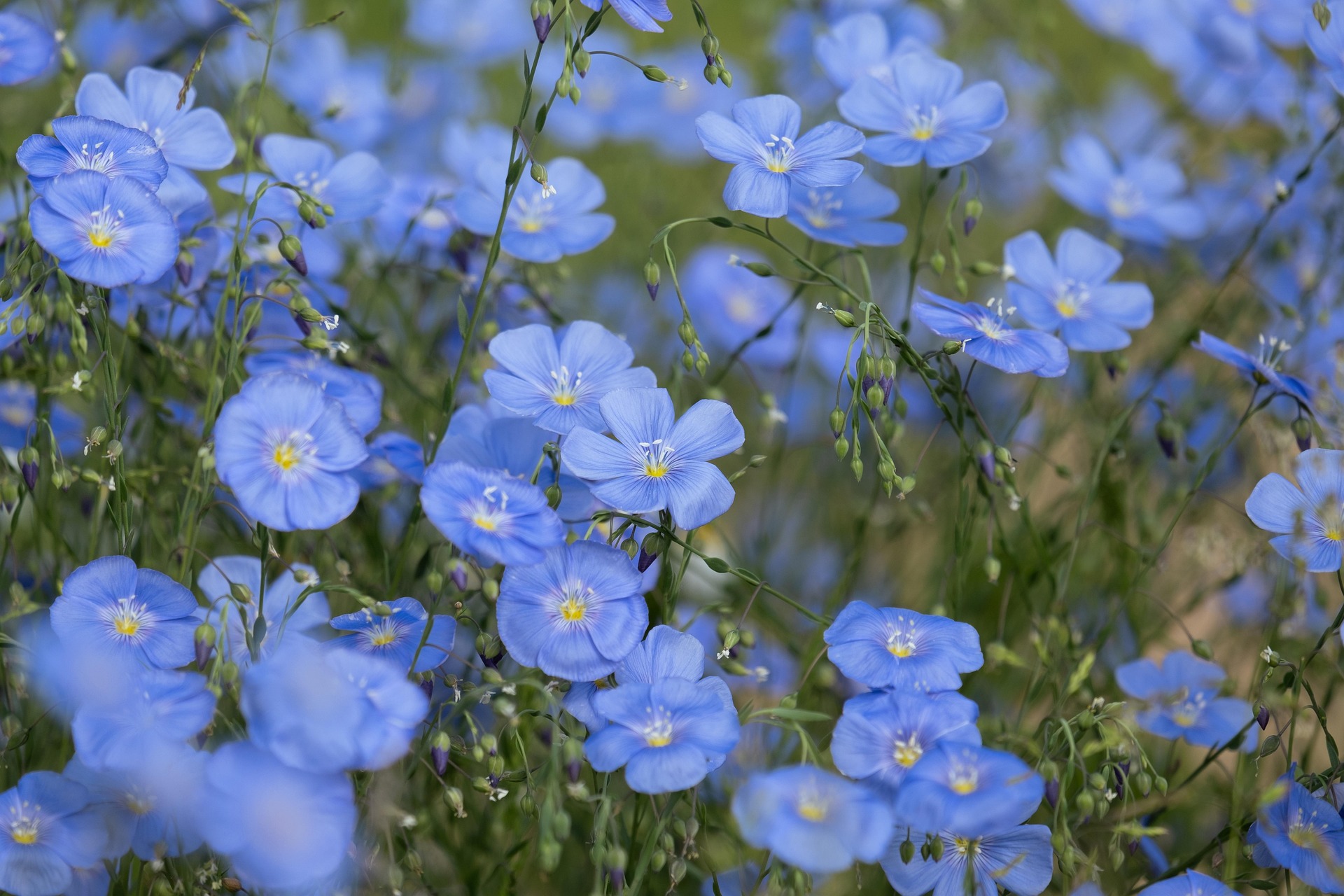
A field of Flax is a beautiful sight and my mothers’ family once grew flax and produced linen up to the late 1800’s in Ireland.
The following video by Rob Stephens takes us from Sowing to Sewing.
Flax takes about 100 days to mature and is ready when the stalks are golden. It is vital that it is harvested by pulling, not cutting by machine.
Harvested stalks are then dried before any processing.
The dried stalks are then soaked in water, a process known as rhetting to break up fibres, which takes about two weeks and I have been informed is a very unpleasant and smelly process.
After drying again, the fibres can now be raked and scutched to break away the outer plant material, leaving behind the fibres.
Scutching by hand is slow and laborious and the early scutching mills were very dangerous places to work.
Flax fibre is then heckled to smooth and straighten it ready for the spinning process, which originally would have been carried out by hand on spinning wheels.
I know that our family had at least three acres of flax due to old records denoting the presence of three looms and nine spinning wheels. These are believed to have been issued by the government at some point to every flax grower in Ireland, at the rate of one loom and three spinning wheels per acre grown.
Once the fibres are spun and then woven, it undergoes a process called beetling where the fabric is pounded to produce a smooth and lustrous surface.
Irish Linen
Ireland was and still is renowned for exceptionally high quality linen but most of the production died out with the invention of the cotton mills in the UK.
Without doubt, this was incredibly labour intensive, hard work and would not have provided a lucrative livelihood, but it must have at least been a subsistence, as our family did not leave their lands in Kildare even during the famine, when nearby Dublin would have been an utterly desperate and dangerous place to be.
Some farmers in Ireland are bringing the craft of linen making back, using traditional methods and in some case, restoring ancient machinery.
Helen Keys and her Husband of Mallon Linens explains her process today.
Growing linen is extremely beneficial to insects and pollinators and if grown sustainably, uses less water and pesticide than cotton production.
As a cloth, linen is very hard and long wearing and can be turned into fine fabric for clothing or very thick fabrics which are often used in upholstery.